Grade Sea Glass - Grade Beach Glass - Value Sea Glass
Have You Been Wondering How to Grade Sea Glass or Beach Glass?
To establish the worth or value of a piece of sea glass, you need to evaluate three things:
- First: The Grade of the Beach Glass
- Second: How Rare is the Color
- Third: The Size and Shape of the Piece
On this Page: Why and How to Grade Sea Glass
When you're walking on the beach and spot a piece of sea glass, you first notice the color.
Bright colors really stand out and are very exciting!
On the other hand even a dull-looking piece may turn out to have very attractive subtle colors.
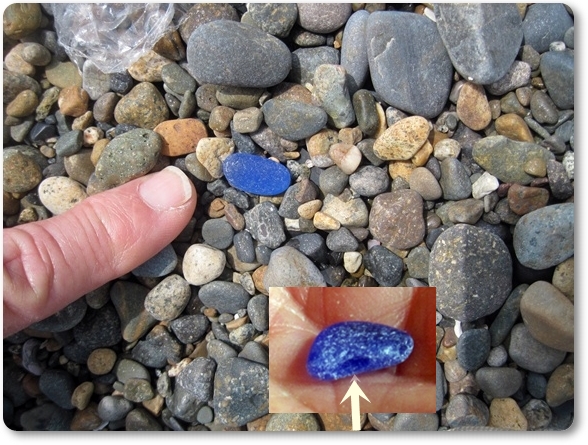
With experience, though, right after remarking the color of the glass you'll look at the grade of glass before getting too overjoyed.
A piece of sea glass that is not very frosted or is chipped or broken can lower not only our excitement level a bit but also the grade and perceived value of that beach gem.
There are Two Main Divisions in Grading Sea Glass - Jewelry Grade & Craft Grade
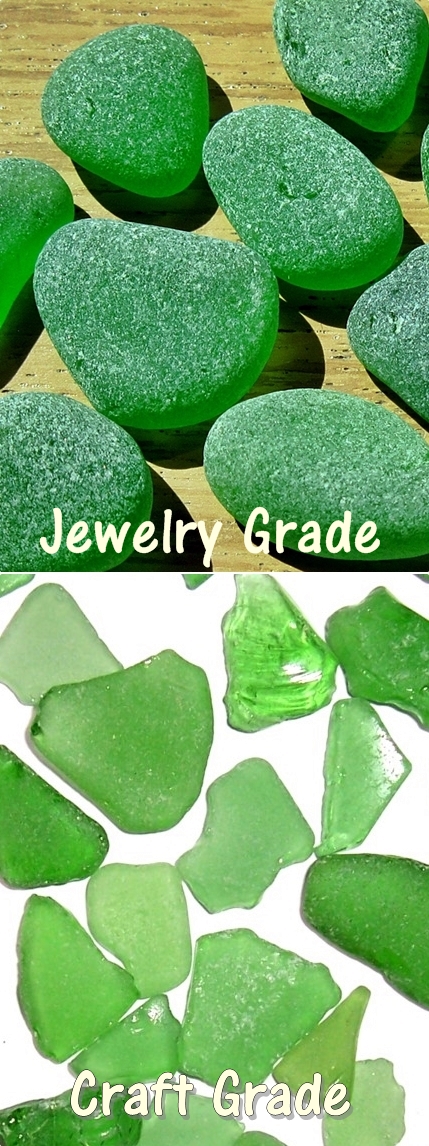
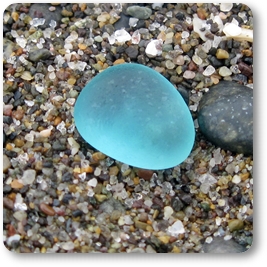
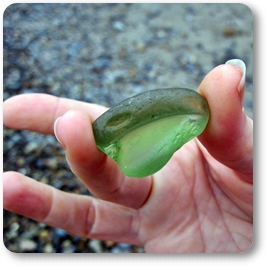
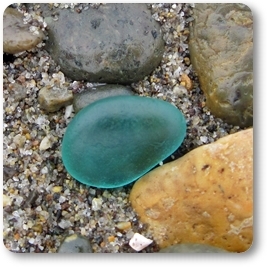
Take a good look at the two pictures above.
It takes a long time for a glass shard to become a rounded and frosted jewelry grade. Therefore, jewelry-grade glass is much rarer than craft grade. Most fine sea glass jewelry is made with Jewelry A sea glass.
Of course, that doesn't mean that craft grade cannot be used for jewelry or vice versa.
However, the very rounded and naturally-symmetrical look as well as the evenly-frosted surface makes Jewelry Grade A sea glass a natural for jewelers.
Click or tap photos for gallery view ...
On this page see:
Jewelry Grades of Sea Glass
Jewelry Grade A Characteristics
- Evenly and thoroughly frosted with very rounded corners.
- No chips, poorly-rounded corners, or visible defects.
- Excellent for fine jewelry.
Here are two views of the same numbered pieces from two different sides. Notice the features.
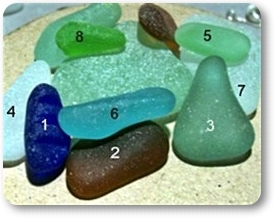
1. Cobalt blue
2. Brown
3. Teal
4. Turquoise
5. Pale sea green (seafoam)
6. Dark aqua
7. Light cyan
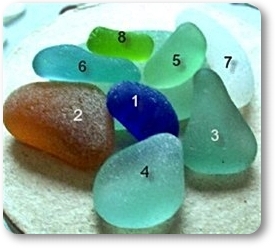
You will notice that pieces #2, #6, and #8 have some edges not quite as rounded.
If they were a little sharper, they would fall into a Jewelry B grade.
Jewelry Grade B Characteristics
- Same qualities as A grade sea glass but
- with a small chip or
- defect visible from one side only OR
- more defined edges/corners.
- Very good for jewelry and arts.
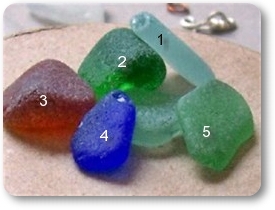
1. Aqua
2. Green
3. Brown
4. Cobalt Blue
5. Medium sea green
You will notice here that #1 and #4 have obvious chips.
However they are the only defects and are visible from one side only, and so qualify as Jewelry Grade B.
Pieces #2, #3, and #5 don't have any visible chips.However, the edges are a little too defined to be Jewelry Grade A.
Jewelry Grade (Other)
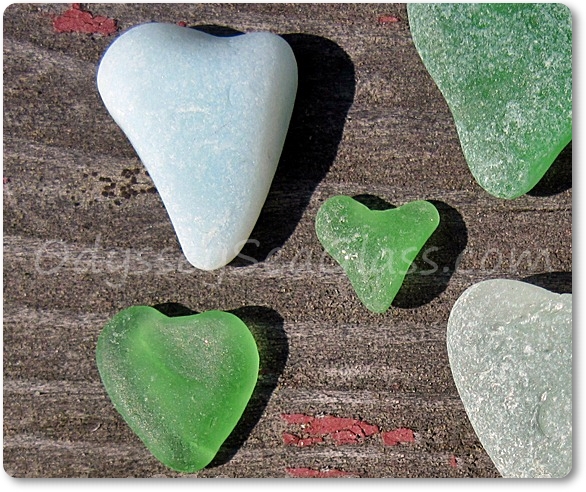
This category might include, for example, the sea glass hearts group above.
A Jewelry (Other) piece of sea glass may have
- more than one of the defects of B grade, but
- because of unique shape, color, or other qualities, it could make a nice jewelry piece.
Here's Lin's Recommended Reading on Jewelry Making:


With gorgeous color photographs and step-by-step instructions, this book teaches the essential skills, like drilling glass, wire wrapping, and texturing metal, to turn your beach-found bounty into attractive accessories, including:
Craft Grades of Sea Glass
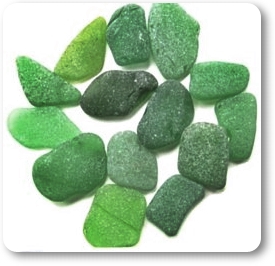
Craft Grade A Characteristics
- Evenly and thoroughly frosted but
- with chips or defects visible from both sides or
- distinct angular edges and
- not more than 1 rough or cracked edge.
Good for many art and craft projects.
Craft Grade B Characteristics
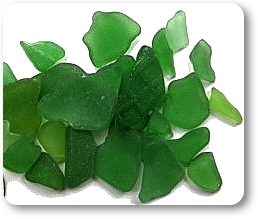
- Must be somewhat frosted.
- May have chips, defects, and rough edges.
Good for mosaics and some craft projects.
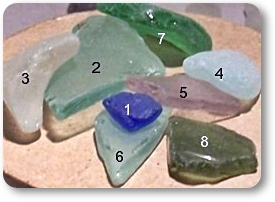
You can see that the above mix of Craft Grade A and B sea glass is much less rounded and tumbled than the Jewelry grades.
1. Cobalt blue
2. Pale sea green
3. Off white (clear) Craft A
4. Light cyan
5. Misty Rose
6. Pale turquoise
7. Green
8. Dark olive
Pieces #1 and #2 are Craft Grade B.
Pieces #3 and #4 are Craft Grade A, being fairly well tumbled and smoothed but with distinct edges and some chips.
Pieces #6, #7, and #8 are actually somewhat shiny. Along with piece #5, they barely meet the standards to be considered sea glass.
However, the colors are not so common so you would likely want to keep them in your collection until replaced with similar colors that are in better tumbled condition.
Recent Articles


-
Grant Park Picnic Area 5 and Seven Bridges Trail in South Milwaukee, WI
Oct 14, 25 10:58 AM
 Grant Park Picnic Area 5 and Seven Bridges Trail in South Milwaukee, WI Put grant park beach picnic area 5 in your map and park at the parking lot at
 -
What could this sea glass from Newport RI be from?
Oct 13, 25 12:57 PM
 I found this in Newport Rhode Island, the writing is very cool and id love to know what it’s from. You’ve unearthed something truly special — a red
 -
From Once the Ocean | Sea Glass Origins & Artistry – Odyssey Sea Glass
Sep 10, 25 02:21 PM
 Thank you, Jai! New Jersey can produce some nice sea glass. Sea glass crafts are such a fun way to turn those little ocean treasures into something beautiful
 -
Need help identifying sea glass
Aug 23, 25 08:37 AM
 Hi, This is the second piece of sea glass I have ever found. Not sure what it might have been. Pattern on it, shape and size has me wondering. Thank you
 -
Seacliff Beach Sea Glass | Santa Cruz Collecting & Cement Ship History
Aug 19, 25 04:09 PM
Explore Seacliff Beach sea glass in Santa Cruz—tips, photos, and the story of the cement ship now mostly washed away by storms. -
Best Sea Glass Beaches in Massachusetts
Aug 15, 25 07:18 PM
 Massachusetts sea glass finds—thick, frosted treasures with mysterious origins and timeless coastal charm.
 -
Responsible Sea Glass Collecting
Aug 14, 25 03:44 PM
 Explore the debate over sea glass collecting and its impact on beaches. Learn tips for responsible beachcombing, why sea glass is disappearing, and how to enjoy this hobby sustainably. Find advice, st…
 -
Conneaut Beach, Ohio - Sea Glass
Aug 08, 25 12:04 PM
 Conneaut Beach, Ohio — Sea Glass Conneaut Beach, tucked along the shores of Lake Erie in northeastern Ohio near Pennsylvania, offers
 -
Santa Monica: Sun, Sand, and Maybe Sea Glass?
Aug 01, 25 04:45 PM
Explore Santa Monica's top attractions and learn about the possibility of finding sea glass. Get tips for beachcombing on this famous California beach and see if you can discover your own ocean-tumble… -
Culburra beach glass
Jul 31, 25 05:17 PM
Culburra Beach – South Coast Sea Glass Haven Nestled on the beautiful South Coast of New South Wales, Culburra Beach is a quiet coastal town known for
Comments!
We love receiving your comments, but please read the notes below before posting. Thank you!NOTES:
All comments are moderated. If you leave the page you won't see your comment until it is approved.
Select the "Post to Facebook" check box to be notified on FB when a reply has been posted.
If you scan the previous comments you may find an answer to your question. Click the "View X more" link at the bottom (if visible) to see all comments.
Photos - If you would like to include a photo, please use our Photo Forums.
Questions - If you have a question, it may already be answered. Please tap or click here to search of our site first.