Tumbled Sea Glass
What is tumbled sea glass?
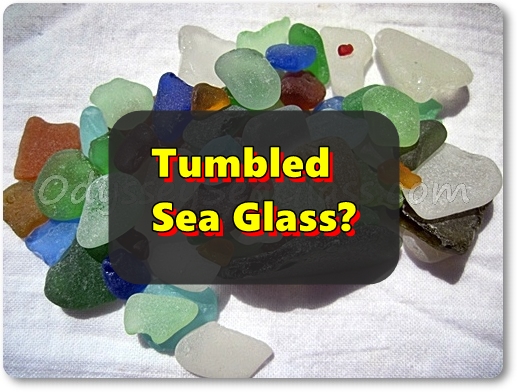
That's a good question. On this page you'll find answers to the following questions:
-
What are the differences between tumbled glass and tumbled beach or sea glass?
-
Why there is a need for truth in advertising regarding tumbled sea glass.
What is tumbled glass?
At its most basic level, it's glass that has been tumbled…and tumbled…and tumbled some more with other hard objects for a period of time, causing tiny nicks in the surface.
As it's tumbled further, it loses its shiny surface and the sharp edges of the glass become softened.
With a lot of tumbling, the glass will eventually lose all edges and corners and become rounded or oval.
What causes the tumbling?
Basically, there are two types of tumbled glass.
- Artificially Tumbled
- Naturally Tumbled
The first type is glass that's been put in a machine called a tumbler and mechanically tumbled for periods of time, usually with several other kinds of material.
- These might be ball bearings or metal of various sizes or rocks.
- A chemical or burnishing compound might be added.
Most commonly, these mechanical tumblers are used to produce those
beautifully shiny rocks that you find in crafts stores or rock hobby
shops.
But if you put
glass in one of these mechanical tumblers, you can get a
frosty or patinaed surface, that "soft" look.
Artificially-tumbled sea glass is often sold as real sea glass. Here's an example:
Buy on Amazon.com:


On Amazon.com, the above glass is advertised as "DIY Crafts Sea Glass." Upon questioning, the seller admitted that it was not real but was "sea glass color."
Artificially tumbled glass does have it's place in DIY crafts, but it should be made clear that it is fake sea glass.
We discuss the differences between artificial and genuine sea glass in greater detail later on in this article.
The second type of tumbled glass
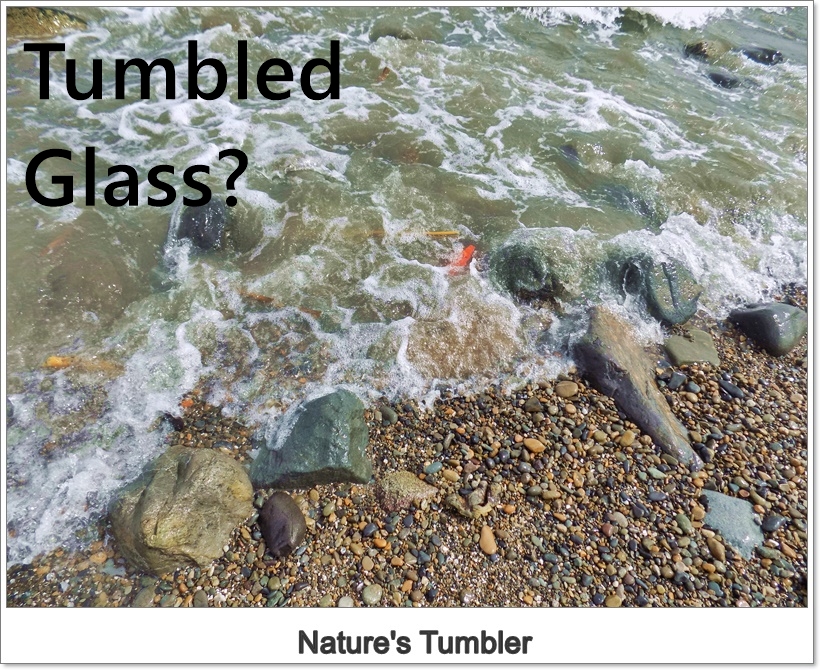
Another type of tumbled glass is glass that's been tumbled for long
periods of time
naturally.
- This usually happens when the glass is exposed to moving water, causing it to be tumbled with rocks, sand, et cetera.
- It can occur in streams and rivers to a certain extent, but by far the most common tumbling action that produces fine tumbled sea glass is from waves against a shore.
- The constant motion of the waves on a beach between the low and high tide mark produces what's called sea glass (found on ocean shores, naturally) or beach glass (which would include naturally wave-tumbled glass that you'd find on the shores of a large lake, like the Great Lakes lying between the United States and Canada).
So, the two basic types of tumbled glass would be:
- Man made (tumbled in a mechanical tumbler) and
- Naturally made (wave action).
By usage, "tumbled glass" has come to mean artificially-produced "sea" glass, while the terms "sea glass" or "beach glass" mean the real thing.
Here's Lin's Recommended Reading on Jewelry Making:


With gorgeous color photographs and step-by-step instructions, this book teaches the essential skills, like drilling glass, wire wrapping, and texturing metal, to turn your beach-found bounty into attractive accessories, including:
What
are the differences
between man-made tumbled sea glass and naturally-tumbled sea glass?
There are very noticeable differences between artificially and
naturally tumbled sea glass. Here are some features of
artificially-tumbled glass:
- Glass tumbled in a tumbler usually still has corners and edges visible, although softened.
- The patina of the tumbled surface is generally pretty smooth, or less "frosted" looking in mechanically-produced tumbled glass.
Sea or beach glass that's of good
quality, on the other hand, has very rounded edges, no
corners, and a much frostier look.
The facets of the frosted surface of
wave-tumbled sea glass reflect light in a distinctive way, causing more
of a "glow" than is found in mechanically-tumbled glass.
Once you have collected
genuine tumbled sea glass yourself for a time, you will
be quick to see the differences between the two.
The best way to avoid scams is to buy from someone well-known in the relatively-small sea glass world. Ask around on social media for recommendations before buying.
See Mary McCarthy's detailed article Stop Buying Fake Sea Glass
Is
there a real need for
truthful advertising of man-made sea glass?
| What would you think if you were to buy a sterling silver necklace or a gold watch and then found out - it wasn't made of silver or gold but was made with some much cheaper and common metal? |
There is a need for making a distinction between real surf-tumbled sea glass or beach glass and man-made tumbled glass.
The unfortunate truth is that sellers are misleading buyers by selling them what is called sea glass but is really imitation or fake sea glass - much lower quality and value.
A good grade of real, genuine, pure sea or beach glass, like gold or silver, is much more beautiful and costly than its imitators.

Don't be fooled by the false advertiser selling "sea glass" or "beach glass."
Check the pages of this site to see and understand what real sea glass is like.
See "What
Is Sea Glass," "Sea
Glass Color," and "Grading
Sea Glass" for helpful information.
For more information on real versus artificial tumbled sea glass, see the following pages on OdysseySeaGlass:
Does
this mean that faux or imitation sea glass is good for nothing and a
scam?
Not at all.
- Tumbled sea glass or faux sea glass can be useful in a variety of imitation sea glass or beach glass crafts.
- Real sea glass does take a lot of time to collect (more valuable) and some projects require a lot of glass or a large number of unusual matching colors - a need that can only be filled by faux (artificial) sea glass.
-
Another
thing is that there are quite a few folks that just don't have ready
access to genuine sea glass or they can't afford to pay for a lot of
pure sea glass. Tumbled or faux sea glass
fills these needs perfectly well.
Real Sea Glass For Sale Right Here on Odyssey - Authentic and Beautiful! >>>
Why do some folks give tumbled or
faux (artificial) sea glass a bad rap?
Where tumbled sea glass gets a bad name is from unscrupulous people passing off artificially-tumbled sea glass as genuine sea glass - as the real thing.
They lead you to believe their product is made with 100% real sea glass when in fact it's just an imitation.
This is especially important when it comes to rare and unusual colors and/or sea glass jewelry.
- Real sea glass jewelry made with a high grade of sea glass and rare colors can cost quite a bit of money.
- Selling jewelry using fake sea glass that costs a nickel a piece is just plain taking advantage of people.
To sum it all up, advertisers need to clearly label their imitation sea glass as imitation, man-made, faux, or other terms that clearly tell you, the consumer, what you are getting!
Recent Articles


-
Grant Park Picnic Area 5 and Seven Bridges Trail in South Milwaukee, WI
Oct 14, 25 10:58 AM
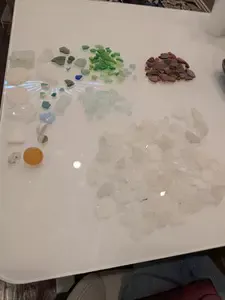 Grant Park Picnic Area 5 and Seven Bridges Trail in South Milwaukee, WI Put grant park beach picnic area 5 in your map and park at the parking lot at
 -
What could this sea glass from Newport RI be from?
Oct 13, 25 12:57 PM
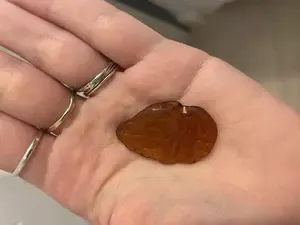 I found this in Newport Rhode Island, the writing is very cool and id love to know what it’s from. You’ve unearthed something truly special — a red
 -
From Once the Ocean | Sea Glass Origins & Artistry – Odyssey Sea Glass
Sep 10, 25 02:21 PM
 Thank you, Jai! New Jersey can produce some nice sea glass. Sea glass crafts are such a fun way to turn those little ocean treasures into something beautiful
 -
Need help identifying sea glass
Aug 23, 25 08:37 AM
 Hi, This is the second piece of sea glass I have ever found. Not sure what it might have been. Pattern on it, shape and size has me wondering. Thank you
 -
Seacliff Beach Sea Glass | Santa Cruz Collecting & Cement Ship History
Aug 19, 25 04:09 PM
Explore Seacliff Beach sea glass in Santa Cruz—tips, photos, and the story of the cement ship now mostly washed away by storms. -
Best Sea Glass Beaches in Massachusetts
Aug 15, 25 07:18 PM
 Massachusetts sea glass finds—thick, frosted treasures with mysterious origins and timeless coastal charm.
 -
Responsible Sea Glass Collecting
Aug 14, 25 03:44 PM
 Explore the debate over sea glass collecting and its impact on beaches. Learn tips for responsible beachcombing, why sea glass is disappearing, and how to enjoy this hobby sustainably. Find advice, st…
 -
Conneaut Beach, Ohio - Sea Glass
Aug 08, 25 12:04 PM
 Conneaut Beach, Ohio — Sea Glass Conneaut Beach, tucked along the shores of Lake Erie in northeastern Ohio near Pennsylvania, offers
 -
Santa Monica: Sun, Sand, and Maybe Sea Glass?
Aug 01, 25 04:45 PM
Explore Santa Monica's top attractions and learn about the possibility of finding sea glass. Get tips for beachcombing on this famous California beach and see if you can discover your own ocean-tumble… -
Culburra beach glass
Jul 31, 25 05:17 PM
Culburra Beach – South Coast Sea Glass Haven Nestled on the beautiful South Coast of New South Wales, Culburra Beach is a quiet coastal town known for